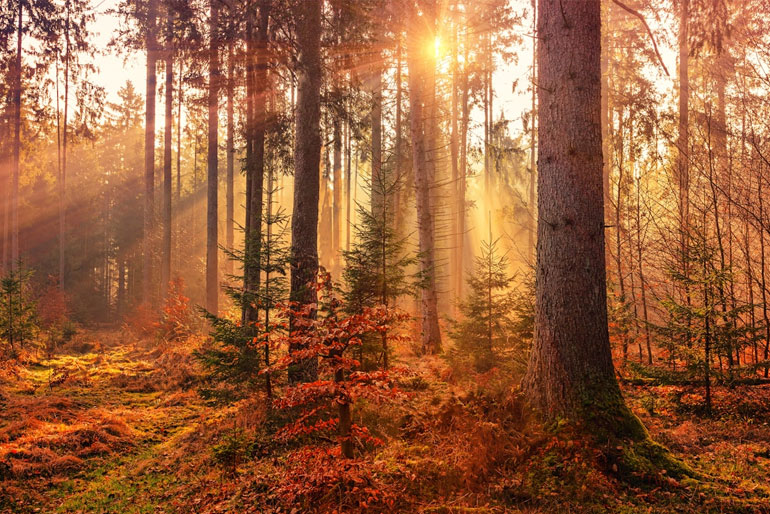
I'll be honest with you — every single September, I mess this up. Last year I told my neighbor "happy first day of fall!" on September 1st while we were both out raking early leaves, and she just looked at me like I'd lost it. Turns out I was three weeks early. Again.
If you've ever felt confused about when fall actually starts, you're not alone. There are two different answers, and honestly, most weather apps and calendars don't do a great job explaining why they disagree with each other.
So let me walk you through what I've learned after years of tracking this stuff — partly out of curiosity, partly because I run a little backyard garden and timing matters for when I pull my tomato plants.
The Short Answer First
For 2026, the first day of fall lands on Tuesday, September 22. That's the date most calendars, weather sites, and almanacs in the US will show you.
If you're checking a source based in the UK or Europe, or one that reports time in UTC, you might see September 23 listed instead. That's not a mistake — it's just a time zone thing. The actual equinox moment happens at 00:06 UTC on September 23, which is still the evening of September 22 here in the US (around 8:04 PM Eastern).
So depending on where you live, you might genuinely start fall on a different calendar day than someone across the ocean. Kind of wild when you think about it.
Why There Are Two "First Days of Fall"
This confused me for years, so let me save you the headache.
So if you saw a headline back on September 1st saying "fall is here," that's meteorological fall talking. If your calendar app says September 22, that's astronomical fall. Both are "correct" — they're just measuring different things.
I didn't understand this distinction until I started using an app called Sky Tonight to track sunrise and sunset times for my garden. The equinox date it gave me didn't match the "first day of fall" banner my phone's default calendar was showing weeks earlier. That's when I finally looked into why.
What Actually Happens During the Equinox
Here's the part that genuinely surprised me the first time I looked into it: on the day of the equinox, day and night are almost — but not exactly — equal in length. The sun crosses directly over the equator, which is why it's called an "equinox," from the Latin words for "equal" and "night."
I used to assume this meant exactly 12 hours of daylight and 12 hours of darkness everywhere on Earth, down to the second. It's actually just really, really close — off by a few minutes depending on your location — because of how sunlight bends through the atmosphere at sunrise and sunset. Not something you'll notice by eye, but a fun fact to drop at a dinner party.
Why the Date Moves Around Every Year
Another thing that tripped me up: the equinox isn't always September 22. Some years it's September 21, some years the 23rd, and rarely, the 24th.
The reason comes down to math nobody warns you about in school — Earth's orbit around the sun takes about 365.25 days, not a clean 365. That extra quarter-day builds up year after year, nudging the equinox later on the calendar. Then a leap year comes along, adds a day to February, and resets the drift back.
That's why, going through the late 2020s, you'll mostly see September 22 or 23 pop up, but if you go back far enough (like 1931), you'll find years where it landed on September 24.
How I Actually Track It (Step by Step)
If you want to know the exact moment fall starts where you live, here's what's worked for me:
A Mistake I Made (So You Don't Have To)
Two years ago, I planned an outdoor "first day of fall" bonfire based on a date I saw on a random pumpkin-spice-themed website. Turns out that site was just using September 22 as a hardcoded date every single year, regardless of the actual equinox. That year, the real equinox was on the 23rd. Not a huge deal in the grand scheme of things, but it did mean my "seasonal" party technically happened a day before autumn officially arrived. My cousin never let me live it down.
Lesson learned: if a site gives you a "fall starts on X" date without mentioning the year-to-year shift, it's probably not double-checking against the actual astronomical data. Stick to sources that explain the equinox time, not just a generic date.
Real-World Reasons This Actually Matters
You might be thinking, "who cares about the exact hour fall starts?" Fair. But there are a few situations where it's genuinely useful:
Common Mistakes People Make
Fall sneaks up differently depending on how you're measuring it, and honestly, once you know both systems exist, it stops being confusing and starts being kind of a fun little fact to know. Next time someone tells you fall "officially" started weeks before your calendar says so, you'll know exactly why — and which one of you is right.