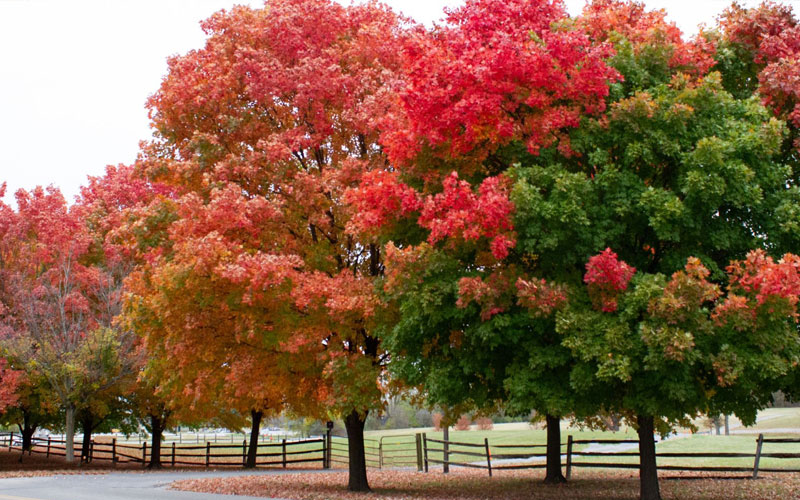
Last October I was driving my kid to soccer practice and I straight up pulled over on the side of the road. Not because anything was wrong with the car. There was this one maple tree at the end of our street that had gone from green to this insane orange-red overnight, or at least it felt like overnight, and I just sat there for a minute like an idiot staring at it.
My daughter asked if we were going to be late. I said "in a second," and I genuinely could not stop looking at this tree.
That's kind of the thing about fall color — you can know it's coming every single year and it still catches you off guard. And after a few years of actually paying attention to it (partly because I run a website about fall, so I have an excuse), I've picked up on some stuff that most people never really think about. So let's get into it.
It's Not Really the Leaves "Turning" Color
Here's the part that messed with my head the first time I read about it. The orange and yellow colors aren't being created in autumn. They're already there. All summer long.
Leaves are green because of chlorophyll, which is the stuff that does the actual work of photosynthesis — turning sunlight into food for the tree. Chlorophyll is a color hog. It's so dominant that it completely masks the yellow and orange pigments (called carotenoids) that have been sitting in the leaf the entire time.
When daylight starts shrinking and temperatures drop, the tree basically decides it's not worth running the leaf factory anymore. It stops producing chlorophyll. The green fades out, and boom — the yellows and oranges that were hiding underneath finally get to show off.
The reds and purples are a different story. Those come from anthocyanins, and unlike the yellows, those are actually made fresh in the fall, often in response to bright sunny days combined with cool (not freezing) nights. That's why some years the reds are absolutely electric and other years everything just kind of goes a dull brown — it depends heavily on the weather that particular autumn.
I didn't know any of this the first few years I was chasing fall color for photos. I just assumed "it gets cold, leaves change." Turns out the actual chemistry is way more interesting, and honestly it changed how I plan my trips to see it.
What I Actually Watch For Now
After a few seasons of trial and error (and a couple of trips where I showed up either two weeks too early or a week too late), here's my rough checklist:
1. Watch the nighttime temps, not the daytime ones. Everyone obsesses over "when does it get cold." What actually matters more is cool nights combined with sunny days. That combo is basically rocket fuel for red pigment production. If you're getting warm nights well into October, color tends to be more muted and drags out slower.
2. Rain and drought both mess with timing. A wet summer followed by a dry, sunny fall tends to produce the best color. A drought-stressed summer, though, can make trees drop leaves early or skip straight to brown, because a stressed tree just wants to shut down and conserve energy — no time for a pretty color show.
3. Different trees peak at different times. This one took me embarrassingly long to figure out. Sumac and Virginia creeper often go red first, sometimes in early September. Maples follow a few weeks later. Oaks are stragglers — they often go brown-red and hang on into November, way after everything else has dropped.
4. Elevation and latitude change everything. If you're anywhere near mountains, color moves downhill as the weeks go on. I learned this the hard way driving up into higher elevation expecting peak color and finding trees already bare, while the valley below was still mostly green. Now I check elevation-specific reports instead of assuming one date works for a whole region.
Step-by-Step: How I Plan a "Leaf Trip" Now
If you want to actually catch peak color instead of guessing, here's the process I use:
1. Start checking regional foliage trackers in early September. A lot of state tourism sites (New England ones especially) run weekly interactive maps showing progression color-coded by county.
2. Cross-reference with the weather pattern, not just the calendar date. If the last few weeks have had cool nights and sunny days, color is probably running on schedule or slightly early.
3. Pick a general week, then stay flexible by 3–5 days. Peak color windows are usually short, like 7–10 days, so build slack into your plans.
4. Go for elevation variety if you can. Even a short drive from lowlands to higher ground can show you three different stages of the color cycle in one afternoon.
5. Shoot early morning or late afternoon if you're taking photos. Midday sun washes out the reds especially. I ruined a whole afternoon of pictures learning this one.
If you're trying to time a specific trip around the season itself rather than just the leaves, it also helps to know exactly how far out you are — I actually use howmanydaysuntilfall.com to keep track of the countdown, and their page on fall colors breaks down regional timing pretty well if you want a general starting point before you dig into local trackers.
Mistakes I've Made (So You Don't Have To)
Going too early because I was impatient. The first weekend it feels like fall, I want to go look at trees. Usually a mistake. Real peak color is almost always 2-3 weeks after the first "it feels like fall" weekend, at least where I live.
Assuming one date works for a whole state. Color doesn't move in a straight line across a map. It's driven by microclimates, elevation, and tree species mix. A county twenty minutes away can peak a full week apart from where you are.
Not checking for wind and storms. I once planned a whole weekend around what should've been peak color, and a wind storm two days before stripped half the trees bare. Now I keep an eye on the forecast right up until the trip, not just weeks in advance.
Forgetting that soil and stress matter. A tree that's sick, drought-stressed, or growing in poor soil often colors early and unevenly compared to a healthy one nearby. If you notice one tree going red weeks before its neighbors, it's not necessarily "early season" — it might just be a stressed tree.
Real Examples From My Own Yard
The maple out front that started this whole obsession usually turns first in my neighborhood, typically the last week of September where I am. My neighbor's oak, on the other hand, barely starts until late October and sometimes still has brown leaves clinging on into Thanksgiving.
Meanwhile, the sumac along the edge of our yard (technically kind of a weed, but I let it live for this exact reason) goes bright red in early September, way before anything else even thinks about changing. If you want an early hint that the color season is starting, sumac and Virginia creeper are usually the tip-off.
If you're into using the season for more than just looking at trees — decorating, planning activities, garden prep — I've found it helps to plan around the actual equinox date rather than just "when it feels like fall." The site has a solid rundown on the autumnal equinox and what it actually means for daylight and temperature shifts, plus ideas for fall activities and fall decor ideas if you want to build a whole season around it instead of just one weekend leaf trip.
A Few Practical Tips If You're Gardening Too
Fall color isn't just a "go look at trees" thing — it actually matters for your yard too. If you're planning what to plant, trees and shrubs known for strong fall color (certain maples, burning bush, some viburnums) can basically double as landscaping and a seasonal show. I added a couple of these to my own yard specifically because I got tired of driving somewhere else every year to see color.
If you're working on your own space this season, there's a decent guide on fall garden prep that covers timing for planting and cleanup, which pairs well with picking color-friendly plants while you're at it.
And if the whole season just gets you in a mood to plan things around it — festivals, holidays, get-togethers — worth a look at fall holidays too, since a lot of them line up almost exactly with peak color depending on where you live.
Final Thoughts
I used to think leaf-peeping was kind of a corny, tourist-brochure thing to care about. Then I actually started paying attention to it, year over year, and realized it's genuinely one of those things that rewards a little bit of knowledge. Once you understand it's not random — that it's weather, chemistry, elevation, and tree species all colliding at once — you start noticing patterns everywhere. You start knowing which tree on your block will go first. You start checking the ten-day forecast differently in September than you do the rest of the year.
And honestly, that maple down the street from me still gets me every single year. I know it's coming. I know roughly when. And I still pull over.