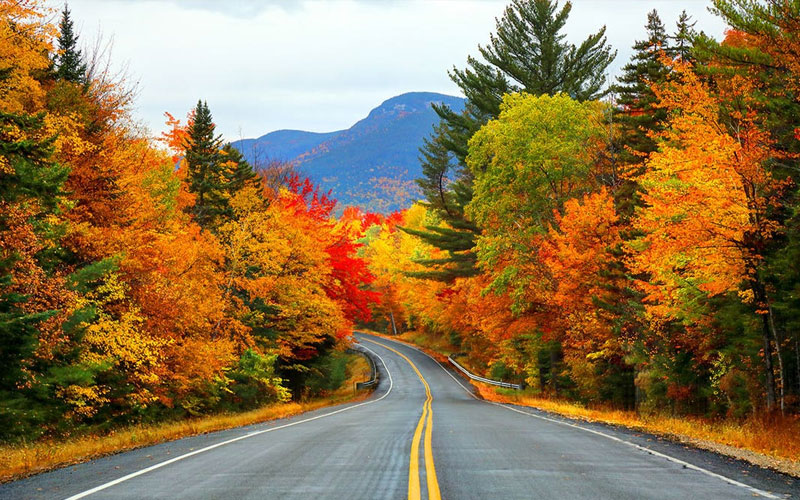
Three years ago I drove two and a half hours to "peak foliage" in the mountains and got there to find half the trees already bare and the other half still stubbornly green. My gas tank was empty, my kid was cranky in the back seat, and I remember thinking: there has to be a better way to time this than just guessing.
There is. And it's not complicated once you know what's actually going on with the leaves and how to track it properly. That trip taught me more about fall colors than any article I'd read beforehand, so I'm putting all of it here — the science made simple, the tools I actually use now, and the mistakes I don't make anymore.
Why Leaves Even Change Color (The Short, Non-Boring Version)
Here's the thing nobody explained to me clearly for years: the colors were always in the leaf. Green just hides them all summer because chlorophyll is working overtime and drowns everything else out.
Once daylight shortens and temperatures drop, trees stop producing chlorophyll. It breaks down, and suddenly the yellows and oranges that were there the whole time (carotenoids, if you want the technical word) get to show off. Reds and purples are a little different — those are made fresh in fall, and they show up more when you get warm sunny days followed by cool (not freezing) nights.
That's actually the detail that changed how I plan my trips now. A random cold snap doesn't guarantee good color. A stretch of crisp, sunny days paired with cool nights right before peak is what gives you those postcard reds. Dry summers followed by a wet, mild fall usually mean duller, browner leaves. I've watched this pattern repeat enough autumns in a row that it's basically become my personal forecasting rule of thumb.
The Mistake I Made (And See Other People Make Constantly)
I assumed "fall" meant late October everywhere, like some fixed date on a calendar. It doesn't. Peak color depends heavily on latitude, elevation, and that year's specific weather — not just the season name.
Northern states and higher elevations turn first, sometimes as early as mid-September. Lower elevations and more southern regions can peak closer to early November. If you're chasing leaves the same weekend every single year regardless of where you are, you're basically playing the lottery.
What actually works: check a regional foliage tracker instead of guessing. I use state tourism foliage maps (Vermont, New Hampshire, and North Carolina all run genuinely good ones), plus the crowd-sourced SmokyMountains.com foliage prediction map, which updates through the season based on real reports and weather models. I check it about once a week starting in mid-September once things start shifting.
My Actual Step-By-Step Process Now
I stopped winging it after that empty-gas-tank trip. Here's what I do every year instead:
1. Mark the general window, not a single date. I start by checking how many days are left until the season even officially begins — this sounds basic but it resets my expectations on timing every single year. I usually check howmanydaysuntilfall.com just to anchor myself, then look at the actual autumnal equinox date, since that's the real astronomical start of the season, not just "September vibes."
2. Track the foliage map weekly, not once. Foliage predictions shift as weather changes. I check every Sunday starting mid-September. Don't trust a single check from three weeks out — that map is basically outdated the moment a heat wave or early frost hits.
3. Pick a backup location. This is the step I skipped the first time and paid for. I now always have a plan B spot at a slightly different elevation or latitude, in case my first choice peaked early or is running late.
4. Go on a weekday if you possibly can. Weekend leaf-peeping traffic in places like the Blue Ridge Parkway or the Adirondacks is genuinely brutal. I once sat in a line of cars for 40 minutes just to get into a scenic overlook parking lot on a Saturday. Same spot on a Tuesday? Pulled right in.
5. Bring the boring stuff. Full tank of gas (learn from my mistake), offline maps downloaded since mountain cell service is unreliable, layers because it's colder than you think once the sun dips, and a real camera or at least manually set your phone's camera — auto mode tends to wash out reds under bright midday sun. Early morning or late afternoon light makes photos way more vivid.
Real Places That Delivered (And Some That Didn't)
Not every "iconic fall destination" lives up to the hype, at least not every year. A few honest notes from my own trips:
The Blue Ridge Parkway (North Carolina/Virginia) — genuinely stunning most years, but timing is everything since elevation changes color timing mile by mile. What's peak at one overlook can be past peak ten minutes down the road.
Vermont's Route 100 — consistently reliable, classic New England color, but book lodging early. Small-town inns fill up fast in early October.
Local city parks — this one surprised me. Some of my favorite color the last two years wasn't some big scenic drive at all, it was a maple-lined street two blocks from my house. You don't need a road trip to see good color; sometimes you just need to actually look up.
Things I Do Beyond Just Looking at Trees
Once the leaves are turning, I try to build the whole season around it rather than treating it as one weekend event. I've pulled a lot of ideas from fall activities over the years — apple picking, cider mills, and short hikes tend to pair naturally with peak color weekends.
I also mark the actual first day of fall on my calendar now, because it's a genuinely nice, low-effort excuse to do something seasonal even before the leaves fully turn. Around the same time I usually get my fall garden cleaned up and planted, since a lot of fall crops actually want to go in right as the color starts changing, not after.
And once the trees peak and start dropping, that's my cue to start on fall decor at home and think ahead to fall holidays coming up. It stretches the whole season out instead of it feeling like one rushed weekend trip.
Common Mistakes I See People Make (Including Past-Me)
Waiting for "peak" to be announced, then rushing out. By the time something is officially called peak, you've usually got a matter of days, not weeks, before it starts dropping. Go a few days early if you're unsure — slightly-before-peak still looks incredible, and it beats arriving to bare branches.
Only checking one source. Foliage trackers can disagree slightly. I check two if I'm driving more than an hour, just to cross-reference.
Ignoring wind and rain in the forecast. A single heavy rainstorm with wind can strip a tree that was gorgeous the day before. If there's a storm in the forecast for your planned trip, consider moving it up rather than pushing it back.
Not checking elevation changes on your route. If you're driving through mountains, color can vary wildly within the same drive. Higher elevations turn and drop first.
Final Thoughts
Fall color isn't really something you get lucky with once you understand the pattern behind it — cool nights, sunny days, the right elevation, and a little bit of patience checking the map instead of just picking a random Saturday. It took me an embarrassingly empty gas tank and a lot of bare branches to figure that out, but every trip since has actually delivered.
If you're planning your own trip this year, start simple: figure out roughly how much time you've got before the season even kicks off, keep an eye on a regional foliage tracker starting mid-September, and build in a backup plan. The rest tends to take care of itself.